When selling an electric vehicle, customers ask about tax and plates. All details come from the Motor Vehicle Tax Act (KraftStG), the Vehicle Registration Ordinance (FZV) and the Electric Mobility Act (EmoG).
Zevra is the B2B platform for digital vehicle registration for car dealers, registration services and fleets: cases are entered in the dealer portal and filed nationwide by power of attorney with qualified electronic signature – from €10 per registration, no base fee, no minimum volume.
Last updated: · Zevra editorial team · Reviewed by Mohamed Gabal, owner
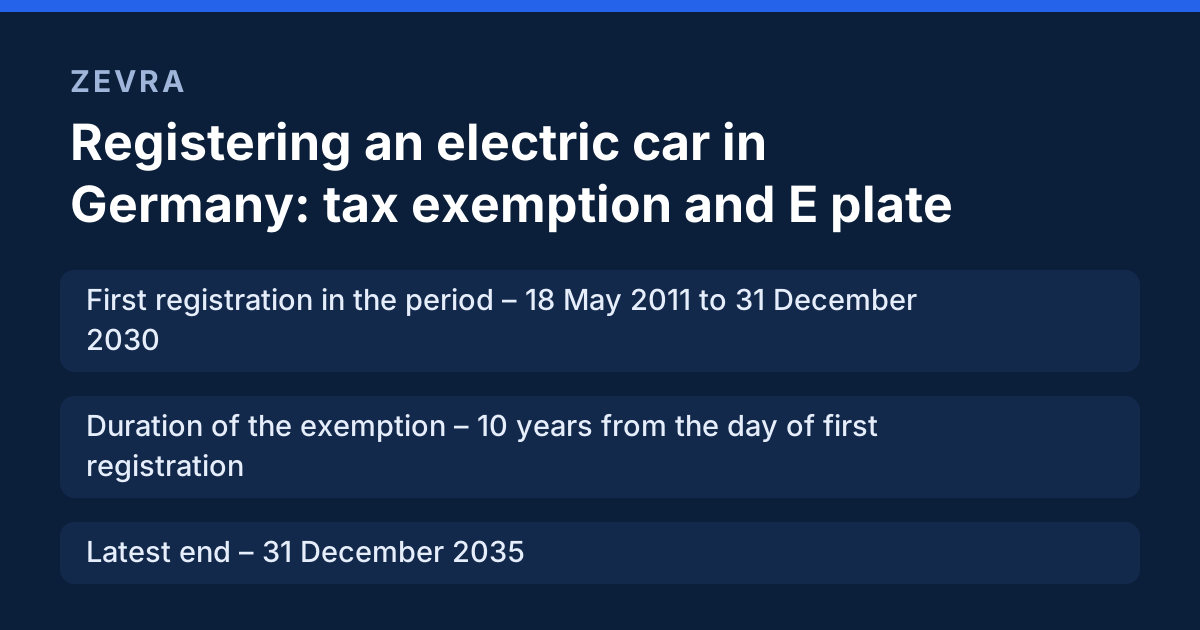
How long is an electric car exempt from vehicle tax?
| Feature | Rule |
|---|---|
| First registration in the period | 18 May 2011 to 31 December 2030 |
| Duration of the exemption | 10 years from the day of first registration |
| Latest end | 31 December 2035 |
| Frequency | once for each vehicle |
An electric vehicle within the meaning of the Act is a vehicle driven exclusively by electric motors fed from mechanical or electrochemical energy stores or from emission-free energy converters.
What happens on a change of keeper?
If the exemption has not yet expired on a change of keeper, it is granted to the new keeper. For the used-car buyer the date of first registration counts, not the purchase date.
Periods of deregistration and periods outside the operating period of a seasonal plate have no effect on the exemption.
Which vehicles get an E plate?
- pure battery electric vehicles
- fuel-cell vehicles
- externally chargeable hybrid vehicles with no more than 50 grams of carbon dioxide per kilometre or at least 40 kilometres of electric range
The E plate is assigned on request; it is not mandatory. Tax exemption and E plate have different requirements: a plug-in hybrid can carry an E plate but is not driven exclusively electrically.
What does the E plate bring?
The Electric Mobility Act allows privileges for parking, for the use of special roads, for access restrictions and for parking fees. Whether and which apply is determined by the local order.
What does this mean for the dealership?
In the Zevra dealer portal you select the E plate directly in the application.
With Zevra, registration costs from €10, deregistration from €2 per case, net and plus official fees.
Read more
- New registration online: register new cars digitally and hand over the same day
- Vehicle deregistration online: take vehicles out of service digitally – for dealers and fleets
- Transfer online: re-register a used car to the buyer digitally
- Re-registration online: put deregistered vehicles back into service digitally
- Day registration online: first registration for one calendar day – digitally from the dealership
- eVB number in vehicle registration: proof of third-party insurance in the digital application
- Digital registration power of attorney: how the dealership registers for the customer with legal certainty
- Vehicle registration without online ID: why the customer needs no eID when the dealership registers
- Number plates in the digital registration case: own press or order with shipping
- Digital vehicle registration in the dealership: the complete guide
- i-Kfz for companies and dealers: portal, large-customer interface or service
- Vehicle registration by the dealer – also in another federal state
- Who offers digital vehicle registration for companies in Germany?
- Uncovering the security code: registration certificate part I, part II and stickers
- Registration certificate part II lost: procedure, deadlines and consequences for the trade
- Short-term plates or red plates: what dealers need for test and transfer drives
- Export plates: exporting vehicles – what dealers need to know
- Registering motorcycles and trailers online: what is the same for dealers – and what differs
- i-Kfz stage 4: what is new – and what does it mean for dealerships?
- Registering a company car: which documents does each legal form need?
- Registration service, authority or i-Kfz: which route pays off for dealers?
- Registering a leased vehicle: who is the keeper – and where does the registration certificate part II stay?
- Registration service at the dealership: how does registration become a selling point?
- Registration for used-car dealers: which vehicles work online?
- Registration service costs: what does a dealership pay per registration?
- How long does online vehicle registration take in Germany?
- Seasonal plates, E plates and H plates: applying online in Germany
- Low-emission sticker (Umweltplakette): what dealers should know
- Change of address after a move: re-registering a vehicle online
- Registering motorhomes and caravans online: what dealers need to know
- Interchangeable plates (Wechselkennzeichen): one plate for two vehicles
- Vehicle registration in Germany: official figures, deadlines and key dates
- Vehicle registration fees in Germany: official fees at the counter and online
- Registration without a valid HU: what is possible when the inspection has expired
- Importing an EU vehicle and registering it in Germany: what dealers need to know
- Keeper's change of name: having the vehicle documents changed
- Documents for vehicle registration: printable checklist per case
- Reserving a number plate: term, fee and rules for personalised plates
- Registering rental cars and taxis: reporting the use and meeting deadlines
- Certificate of destruction (Verwertungsnachweis): scrapping and deregistering a car
- Green number plates: plates for tax-exempt vehicles in Germany
- Online registration rejected: common reasons and solutions
- Becoming a KBA large customer: requirements, details and duties
- HU intervals: when is the general inspection due for which vehicle?
- Vehicle tax at registration: SEPA mandate and tax arrears
- Temporary registration proof: content, validity and duties
- CoC (certificate of conformity): the proof at first registration
- Car dealerships
- Registration services
- Fleet operators
- Leasing companies
- Rental & car subscription
- Banks & insurers
- Manufacturers & importers
- Remarketing & resellers
- Pricing
Sources: Kraftfahrzeugsteuergesetz (KraftStG) § 3d – Steuerbefreiung für Elektrofahrzeuge · Kraftfahrzeugsteuergesetz (KraftStG) § 9 – Steuersatz · Fahrzeug-Zulassungsverordnung (FZV) § 11 – Kennzeichnung elektrisch betriebener Fahrzeuge · Elektromobilitätsgesetz (EmoG) § 3 – Bevorrechtigungen