In the trade, compulsory deregistration mostly appears at purchase: the vehicle is on the lot without a valid registration. This page sorts the occasions by the Vehicle Registration Ordinance and the Motor Vehicle Tax Act.
Zevra is the B2B platform for digital vehicle registration for car dealers, registration services and fleets: cases are entered in the dealer portal and filed nationwide by power of attorney with qualified electronic signature – from €10 per registration, no base fee, no minimum volume.
Last updated: · Zevra editorial team · Reviewed by M. Gabal, owner
What is a compulsory deregistration?
The word Zwangsstilllegung appears in neither of the two regulations. The Motor Vehicle Tax Act speaks of deregistration ex officio, the Vehicle Registration Ordinance of restricting and prohibiting operation.
Both mean the same: it is not the keeper who applies for deregistration; the registration authority orders it or carries it out itself.
For what reasons does the authority take a vehicle out of service?
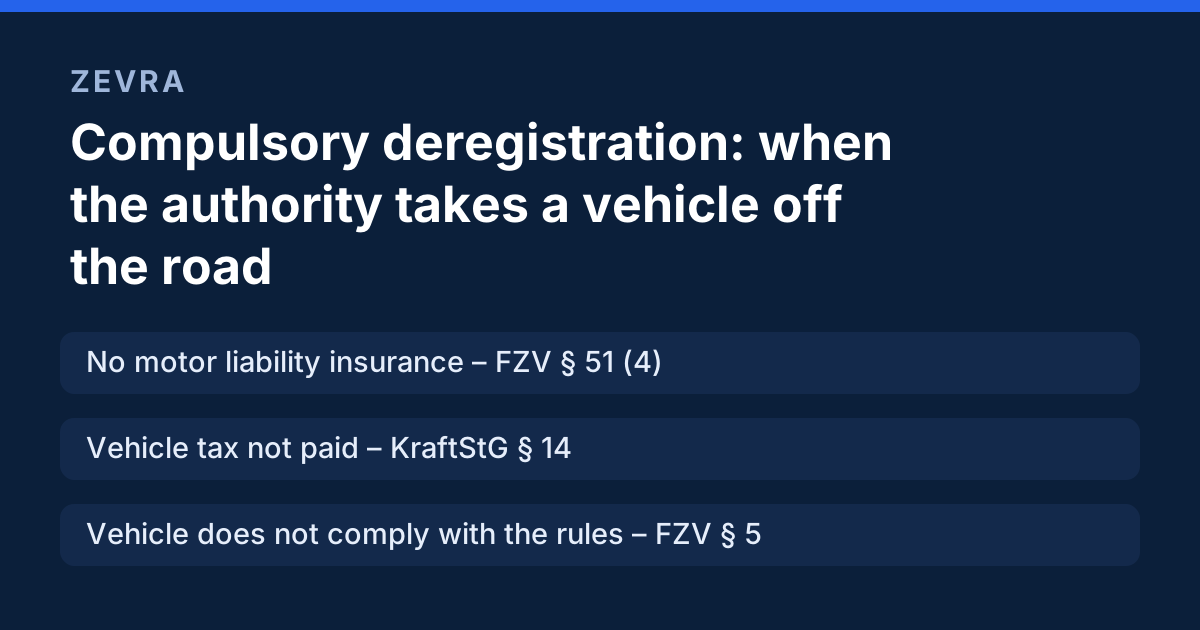
The two regulations name 6 occasions. In 3 of them the authority must act, in the others it may.
| Occasion | Legal basis | What the authority does |
|---|---|---|
| No motor liability insurance | FZV § 51 (4) | takes the vehicle out of service without delay |
| Vehicle tax not paid | KraftStG § 14 | withdraws the registration certificate Part I and removes the seal from the plate |
| Vehicle does not comply with the rules | FZV § 5 | may set a deadline, restrict or prohibit operation |
| Change or move not reported | FZV § 15 (1) and (4) | may prohibit operation until the duty is fulfilled |
| Change of keeper not reported or not transferred | FZV § 15 (5) | may call in the registration certificate with a 4-week deadline |
| Re-registration abroad | FZV § 15 (7) | takes the vehicle out of service after notice from the Federal Motor Transport Authority |
If the call-in under § 15 expires without result, the registration of the vehicle ends.
What happens when motor liability insurance is missing?
If a vehicle with an assigned plate has no motor liability insurance, the keeper must have it taken out of service without delay. If the registration authority learns of this, it must take the vehicle out of service without delay.
- The insurer may notify the registration authority that the insurance does not exist or no longer exists.
- The notice contains, among other things, the plate number and the vehicle identification number.
- No notice is made if the authority has received the insurance confirmation of a new motor liability insurance and the insurer has been informed of this.
- The authority informs the insurer of the date on which the notice was received.
What happens when vehicle tax is not paid?
If the tax has not been paid, the registration authority acts at the request of the authority that administers the motor vehicle tax.
- It withdraws the registration certificate Part I.
- It corrects any trailer lists that were issued.
- It removes the seal from the official plate.
- The orders are issued by written administrative act.
The procedure follows the Administrative Procedure Act. Disputes go to the administrative courts.
What applies to defects on the vehicle?
If a vehicle proves not to comply with the rules, the registration authority may set the keeper or owner a reasonable deadline to remedy the defects, or restrict or prohibit operation on public roads.
If operation is prohibited, the keeper or owner must have the vehicle taken out of service without delay or prove that the reasons do not or no longer exist. The authority may order an expert report or the presentation of the vehicle for this.
How does re-registration work afterwards?
To re-register a vehicle that was taken out of service, the registration certificate Part I and Part II must be presented.
- For re-registration to the same keeper with the previous plate, the registration certificate Part II is not required.
- If a general inspection would have been due in the meantime, it must take place before re-registration.
- Re-registration is possible online if the vehicle has not been out of service for more than 7 years.
What does this mean for dealerships and registration services?
Zevra is the B2B platform for digital vehicle registration. Dealerships and registration service providers submit re-registration, transfer and deregistration digitally. Re-registration costs from €10 per case, deregistration €2 net, plus official fees.
Zevra is not an authority. Only the registration authority decides on a prohibition of operation and on lifting it.
- Registration offences: what section 77 FZV lists
- Re-registration online: put deregistered vehicles back into service digitally
- Vehicle tax at registration: SEPA mandate and tax arrears
- eVB number in vehicle registration: proof of third-party insurance in the digital application
- Car sold: what seller and buyer must report to the authority
- Temporary registration proof: valid for 10 days
- Documents posted by the authority: within 6 days
- Digital deregistration: documents from 01.01.2015
- Digital registration: documents from 01.01.2018
- Registration with Zevra: €10 net
- Deregistration with Zevra: €2 net · base fee: €0
Deadlines and cut-off dates according to: Bundesministerium für Verkehr
Read more
- New registration online: register new cars digitally and hand over the same day
- Transfer online: re-register a used car to the buyer digitally
- Re-registration online: put deregistered vehicles back into service digitally
- Day registration online: first registration for one calendar day – digitally from the dealership
- Vehicle deregistration online: take vehicles out of service digitally – for dealers and fleets
- Change of address after a move: re-registering a vehicle online
- Vehicle registration by the dealer – also in another federal state
- Registration for used-car dealers: which vehicles work online?
- Registering a leased vehicle: who is the keeper – and where does the registration certificate part II stay?
- Registering a company car: which documents does each legal form need?
- Registering motorcycles and trailers online: what is the same for dealers – and what differs
- Registering motorhomes and caravans online: what dealers need to know
- Registering an electric car in Germany: tax exemption and E plate
- Importing an EU vehicle and registering it in Germany: what dealers need to know
- Registration without a valid HU: what is possible when the inspection has expired
- Keeper's change of name: having the vehicle documents changed
- Registering rental cars and taxis: reporting the use and meeting deadlines
- Certificate of destruction (Verwertungsnachweis): scrapping and deregistering a car
- Registering a tractor: which farm machinery needs no registration
- Car sold: what seller and buyer must report to the authority
- Reporting vehicle changes: what must be reported without delay
- Registration offences: what section 77 FZV lists
- Car dealerships
- Registration services
- Fleet operators
- Leasing companies
- Banks & insurers
- Remarketing & resellers
- Pricing
Sources: Fahrzeug-Zulassungsverordnung (FZV) § 5 – Beschränkung und Untersagung des Betriebs von Fahrzeugen · Fahrzeug-Zulassungsverordnung (FZV) § 15 – Mitteilungspflichten bei Änderungen · Fahrzeug-Zulassungsverordnung (FZV) § 16 – Außerbetriebsetzung, Wiederzulassung · Fahrzeug-Zulassungsverordnung (FZV) § 29 – Internetbasierte Wiederzulassung · Fahrzeug-Zulassungsverordnung (FZV) § 51 – Maßnahmen und Pflichten bei fehlendem Versicherungsschutz · Kraftfahrzeugsteuergesetz (KraftStG) § 14 – Außerbetriebsetzung von Amts wegen · Sources