In the two-wheeler trade, the vehicle with an insurance plate stands next to the registered motorcycle. This page sorts, by the Vehicle Registration Ordinance, what applies to these vehicles.
Zevra is the B2B platform for digital vehicle registration for car dealers, registration services and fleets: cases are entered in the dealer portal and filed nationwide by power of attorney with qualified electronic signature – from €10 per registration, no base fee, no minimum volume.
Last updated: · Zevra editorial team · Reviewed by M. Gabal, owner
Which vehicles need an insurance plate?
The Vehicle Registration Ordinance names 3 types of vehicle. They are exempt from registration but may only be operated on public roads with a valid insurance plate.
- two- or three-wheeled mopeds,
- motorised wheelchairs,
- light four-wheeled motor vehicles.
The insurance plate is the proof that motor liability insurance exists for the vehicle.
How long is an insurance plate valid?
It is valid for one traffic year. The traffic year covers the period from 1 March of one year to the end of February of the next year. When the traffic year ends, plate and certificate lose their validity.
After the insurance contract is concluded and the premium is paid, the insurer hands the plate to the keeper together with a certificate. The person driving the vehicle must carry the certificate.
What colour is the insurance plate?
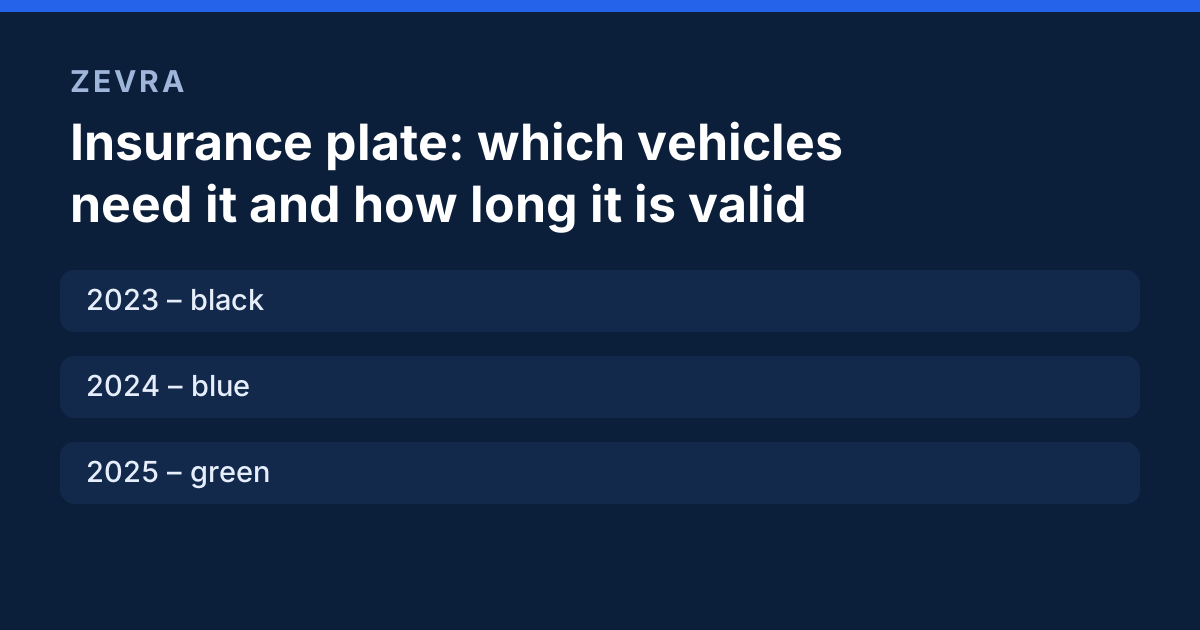
The colour of the lettering changes with the traffic year in a fixed sequence of 3 colours. The background is always white.
| Traffic year | Lettering |
|---|---|
| 2023 | black |
| 2024 | blue |
| 2025 | green |
| 2026 | black |
The ordinance names the colours for 2023 to 2025 and orders that the sequence repeats in the following traffic years. The border has the same colour as the characters.
How is the plate structured and mounted?
The identification number consists of no more than 3 digits and no more than 3 letters. The digits stand in one line above the letters. The plate also shows the traffic year.
- It must be fixed firmly to the rear of the vehicle, if possible below the tail light.
- The lower edge must not be less than 200 millimetres above the road.
- It must be readable from at least 15 metres.
- It must be reflective and must be neither covered nor dirty.
What applies to e-scooters and other personal light electric vehicles?
Personal light electric vehicles carry no plate but an insurance sticker. It is an adhesive label with a hologram that sticks permanently to the vehicle surface.
- The lower edge must not be less than 50 millimetres above the road.
- The sticker must be readable from at least 8 metres.
- The certificate need not be carried; it is enough to keep it and hand it over on request.
What happens if the insurance ends early?
If the insurance relationship ends before the traffic year expires, the insurer asks the keeper to return plate and certificate without delay and notifies the registration authority of the termination.
If the keeper does not comply, the registration authority withdraws plate and certificate.
What does this mean for the trade?
For test and transfer drives there are red insurance plates. Their letter range begins with Z; they need not be fixed firmly to the vehicle.
Zevra is the B2B platform for digital vehicle registration. Zevra does not handle insurance plates: they come from the insurer. For vehicles that require registration, registration at Zevra costs from €10 per case, deregistration €2 net, plus official fees.
- Registering motorcycles and trailers online: what is the same for dealers – and what differs
- Number plate types in Germany: all vehicle plates compared
- Short-term plates or red plates: what dealers need for test and transfer drives
- eVB number in vehicle registration: proof of third-party insurance in the digital application
- Temporary registration proof: valid for 10 days
- Documents posted by the authority: within 6 days
- Digital deregistration: documents from 01.01.2015
- Digital registration: documents from 01.01.2018
- Registration with Zevra: €10 net
- Deregistration with Zevra: €2 net · base fee: €0
Deadlines and cut-off dates according to: Bundesministerium für Verkehr
Read more
- Number plate types in Germany: all vehicle plates compared
- Number plates in the digital registration case: own press or order with shipping
- Seasonal plates, E plates and H plates: applying online in Germany
- Interchangeable plates (Wechselkennzeichen): one plate for two vehicles
- Short-term plates or red plates: what dealers need for test and transfer drives
- Export plates: exporting vehicles – what dealers need to know
- Low-emission sticker (Umweltplakette): what dealers should know
- 100 km/h plaque for trailers: requirements and procedure
- Reserving a number plate: term, fee and rules for personalised plates
- Green number plates: plates for tax-exempt vehicles in Germany
- Keeping your number plate: what applies when moving or changing keeper
- Car dealerships
- Registration services
- Fleet operators
- Motorcycle dealers
- Pricing
Sources: Fahrzeug-Zulassungsverordnung (FZV) § 3 – Notwendigkeit einer Zulassung · Fahrzeug-Zulassungsverordnung (FZV) § 52 – Versicherungskennzeichen · Fahrzeug-Zulassungsverordnung (FZV) § 53 – Ausgestaltung und Anbringung des Versicherungskennzeichens · Fahrzeug-Zulassungsverordnung (FZV) § 55 – Maßnahmen bei vorzeitiger Beendigung des Versicherungsverhältnisses · Fahrzeug-Zulassungsverordnung (FZV) § 56 – Versicherungsplakette · Sources